User Research
Patient Visibility
Investigating how practices manage sensitive patient information and identifying where conflicting systems were creating risk and uncertainty.
Year :
2026
Industry :
Healthcare
Company :
OneAdvanced

Problem :
Patient visibility settings determine what information patients can access, but practices were managing these controls across both Docman and EMIS Web.
When the systems behaved differently or one setting overrode another, users could lose confidence in which rules were actually being applied.
Solution :
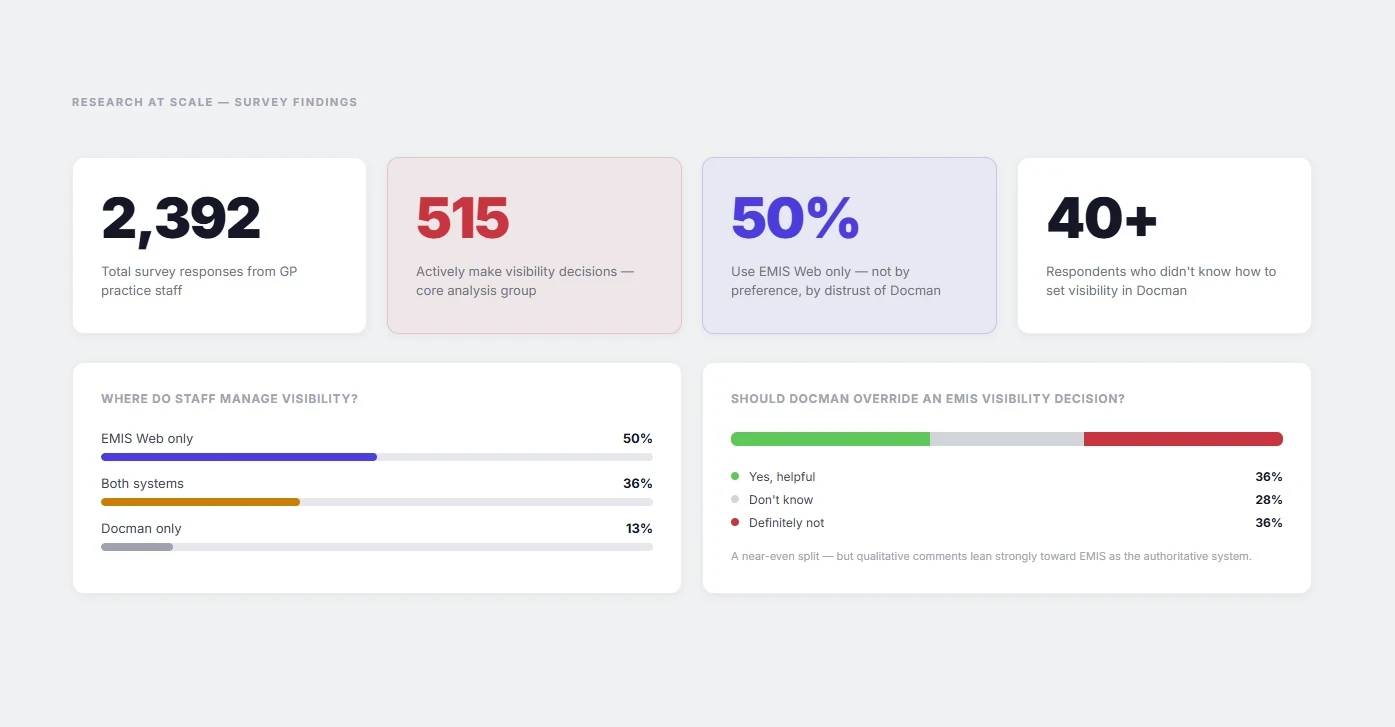
I combined quantitative and qualitative research, analysing 2,392 survey responses, including 515 decision-makers, alongside focused sessions with a senior clinical coder, IT lead and GP/Caldicott Guardian.
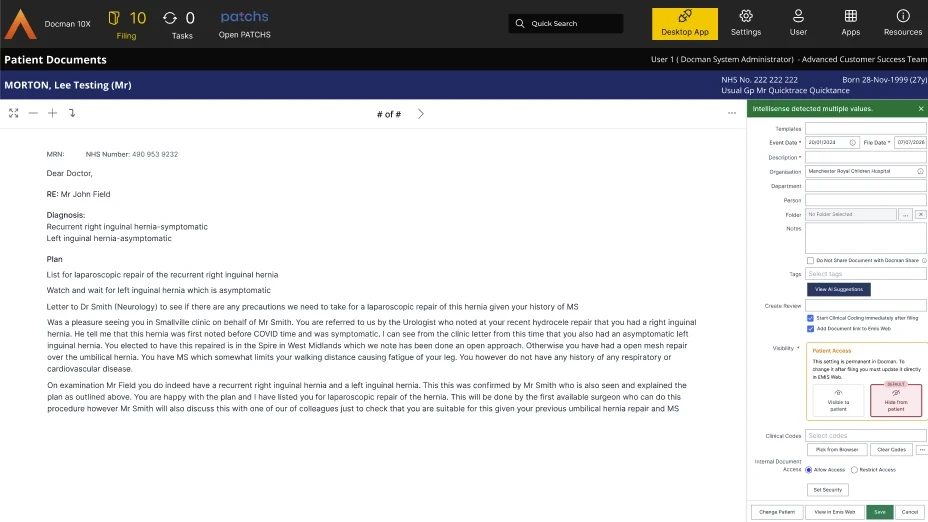
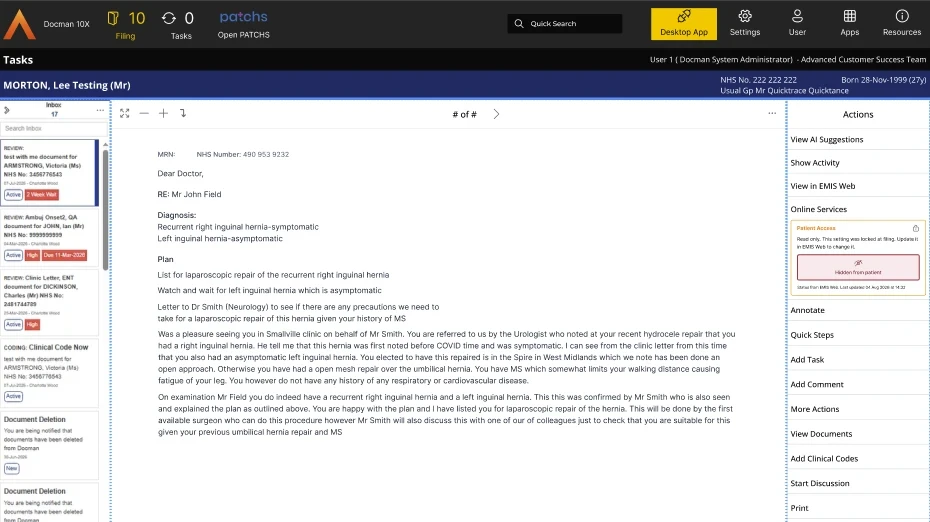
The findings identified trust, system synchronisation and unclear visibility controls as key issues. I translated these insights into updated UI designs, simplifying how visibility settings were communicated and managed and creating a clearer, more predictable experience for practice staff.
Challenge :
The challenge was understanding a workflow involving sensitive clinical information, different practice processes and users with varying levels of technical knowledge.
Research also uncovered a significant safety concern: sensitive correspondence could potentially become visible to a patient before a clinician had the opportunity to discuss it with them.
Summary :
The project moved from research through to design, turning evidence from real users into tangible improvements to the product.
It demonstrates my ability to identify problems through research, translate complex findings into design decisions, and carry those insights through into an improved user experience.
More Projects



User Research
Patient Visibility
Investigating how practices manage sensitive patient information and identifying where conflicting systems were creating risk and uncertainty.
Year :
2026
Industry :
Healthcare
Company :
OneAdvanced
Problem :
Patient visibility settings determine what information patients can access, but practices were managing these controls across both Docman and EMIS Web.
When the systems behaved differently or one setting overrode another, users could lose confidence in which rules were actually being applied.
Solution :
I combined quantitative and qualitative research, analysing 2,392 survey responses, including 515 decision-makers, alongside focused sessions with a senior clinical coder, IT lead and GP/Caldicott Guardian.
The findings identified trust, system synchronisation and unclear visibility controls as key issues. I translated these insights into updated UI designs, simplifying how visibility settings were communicated and managed and creating a clearer, more predictable experience for practice staff.
Challenge :
The challenge was understanding a workflow involving sensitive clinical information, different practice processes and users with varying levels of technical knowledge.
Research also uncovered a significant safety concern: sensitive correspondence could potentially become visible to a patient before a clinician had the opportunity to discuss it with them.
Summary :
The project moved from research through to design, turning evidence from real users into tangible improvements to the product.
It demonstrates my ability to identify problems through research, translate complex findings into design decisions, and carry those insights through into an improved user experience.